Weight Watchers Scale Manual: A Comprehensive Guide (Updated 12/04/2025)
Today’s date is 12/04/2025. Weight Watchers is actively researching connected scales for enhanced program integration, including randomized control trials and personalized user feedback.
Weight Watchers (WW) scales are specifically designed to integrate seamlessly with the broader WW program, offering more than just a simple weight measurement. These scales have evolved significantly, ranging from traditional analog models to sophisticated, connected “smart” scales. The core purpose remains consistent: to empower individuals on their wellness journey by providing consistent and insightful data.
Currently, WW is actively conducting research, including a randomized control trial, to evaluate the impact of connected scales on online weight loss interventions. This demonstrates a commitment to leveraging technology for improved outcomes. Utilizing a WW scale isn’t merely about tracking pounds lost; it’s about gaining a deeper understanding of your body composition and progress within the WW ecosystem.
Why Use a Weight Watchers Scale?
Employing a Weight Watchers scale offers distinct advantages beyond standard weight tracking. These scales are engineered to work with the WW Points system, providing data that directly informs personalized feedback and insights. WW’s ongoing clinical trials, utilizing connected scales, highlight their dedication to scientifically-backed weight management.
Unlike generic scales, WW scales facilitate a more holistic approach. They can contribute to tailored program experiences, potentially accelerating progress. The integration allows for a deeper understanding of how lifestyle choices impact weight and overall wellness. Furthermore, participation in these trials can offer valuable contributions to weight loss research and program refinement.
Types of Weight Watchers Scales
Weight Watchers offers a range of scales to suit diverse needs and preferences. Digital Weight Watchers Scales provide precise readings and often include additional features like memory storage. Analog Weight Watchers Scales offer a classic, straightforward approach without complex technology. However, the most innovative are the Connected/Smart Weight Watchers Scales.
These smart scales seamlessly integrate with the Weight Watchers app, automatically logging data and providing comprehensive body composition analysis. They are central to WW’s current research initiatives, including randomized control trials, demonstrating a commitment to technologically advanced weight management solutions. Choosing the right scale depends on individual preferences and desired functionality.
Digital Weight Watchers Scales
Digital scales represent a popular choice for Weight Watchers members seeking accuracy and convenience. These scales display weight readings numerically, eliminating interpretation issues common with analog models. Many digital Weight Watchers scales feature memory functions, storing previous weights for easy progress tracking.
They often boast a sleek design and user-friendly interfaces. While not as advanced as connected scales, they provide a reliable and straightforward weighing experience. Digital scales are a solid option for those prioritizing simplicity and precise measurements within the WW program, supporting consistent monitoring of weight loss journeys.
Analog Weight Watchers Scales
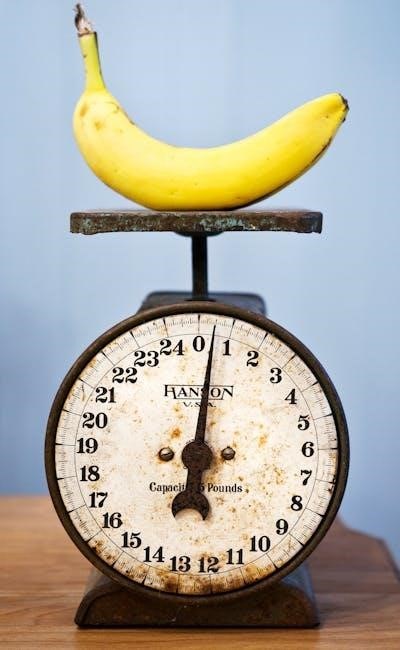
Analog scales, featuring a dial and needle, offer a classic approach to weight measurement. While potentially less precise than digital counterparts, they remain a functional option for Weight Watchers participants. These scales don’t require batteries, providing a reliable backup or a preference for those avoiding electronic devices.
Reading an analog scale involves interpreting the needle’s position on the dial. Consistent positioning of the scale on a level surface is crucial for accurate readings. Though less common now, analog scales can still effectively support weight tracking within the WW program, offering a simple and durable solution.
Connected/Smart Weight Watchers Scales
Smart scales represent the cutting edge of weight tracking technology within the Weight Watchers ecosystem. These scales wirelessly sync data to the WW app, automatically logging your weight and potentially other metrics like body fat percentage and muscle mass. This seamless integration streamlines progress tracking and provides personalized insights.
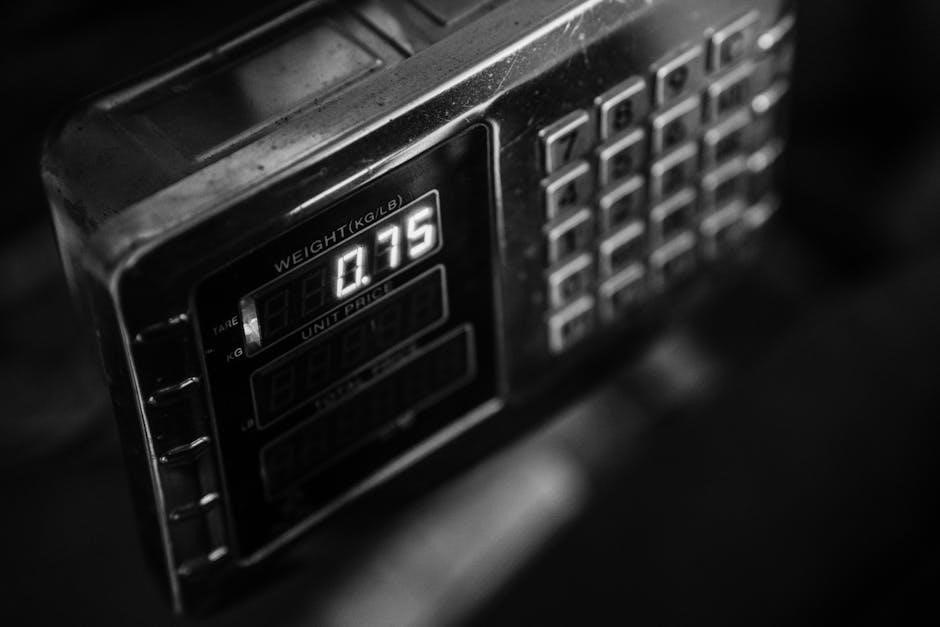
Currently, Weight Watchers is actively conducting clinical trials utilizing connected scales to assess their impact on weight loss interventions. These trials aim to refine tailored feedback mechanisms, enhancing the program’s effectiveness. Smart scales offer convenience and a deeper understanding of body composition, supporting a holistic approach to wellness.
Setting Up Your Weight Watchers Scale
Initial setup is crucial for accurate readings. Begin by carefully unpacking your scale and inspecting it for any damage. Battery installation typically involves opening a compartment on the scale’s underside and inserting batteries according to the polarity markings. For smart scales, the next step involves connecting to the Weight Watchers app.
Download the WW app and follow the on-screen instructions to pair your scale via Bluetooth. Finally, calibrating your Weight Watchers scale ensures precision. This often involves a brief setup process within the app or following the scale’s instructions.
Initial Setup & Battery Installation
Unboxing and inspection are the first steps. Ensure all components are present and undamaged. Locate the battery compartment, usually on the scale’s underside. Battery installation requires matching the positive (+) and negative (-) terminals as indicated. Use fresh batteries for optimal performance; avoid mixing old and new ones.
Before first use, place the scale on a hard, level surface. Power it on and allow it to initialize. Some scales may require a brief period to calibrate automatically. Refer to the included documentation for specific instructions related to your model. Proper setup guarantees accurate weight measurements from the start.
Connecting to the Weight Watchers App (For Smart Scales)
Download the Weight Watchers app from your device’s app store; Ensure your smart scale is powered on and in pairing mode – consult your scale’s manual for specific instructions. Within the app, navigate to the “Devices” or “Scale” section and select “Add Scale.” The app will search for nearby Bluetooth-enabled scales.
Select your scale from the list when it appears. You may be prompted to enter a pairing code, usually found on the scale itself or in the accompanying documentation. Successful connection enables automatic data synchronization, providing personalized feedback and insights within the WW program.
Calibrating Your Weight Watchers Scale
Calibration ensures accurate readings. Most Weight Watchers scales require occasional calibration, especially after battery changes or relocation. Digital scales often self-calibrate, but some models require manual adjustment. Refer to your scale’s manual for specific calibration instructions.
Typically, calibration involves placing a known weight (like a standard dumbbell) on the scale and pressing a “Calibrate” button. The scale adjusts its internal settings to match the known weight. Proper calibration is crucial for tracking progress accurately within the WW Points system and receiving reliable body composition data, if applicable.
Understanding Your Scale’s Display
Decoding your scale’s readout is essential. Weight Watchers scales display weight measurements, and advanced models offer body composition analysis. Familiarize yourself with the units of measurement (pounds, kilograms, stones) and how to switch between them.
Smart scales present data via LCD screens or connected apps, showing weight, body fat percentage, muscle mass, and water weight. Error codes indicate potential issues – consult the manual for interpretations. Consistent understanding of these displays allows for accurate progress tracking and informed participation in WW program features, including personalized feedback and clinical trials.
Reading Weight Measurements

Accurate weight readings are fundamental to your WW journey. Ensure the scale is on a hard, level surface before each use. Step onto the scale with feet evenly distributed. Allow a moment for the reading to stabilize – avoid movement during measurement.
Note the displayed weight, paying attention to the units (lbs, kg, or stones). Digital scales typically show a clear numerical value, while analog scales require interpreting the needle position. Consistent reading times and conditions are crucial for reliable data, supporting effective progress tracking within the Weight Watchers program and potential clinical trial participation.
Understanding Body Composition Data (If Applicable)
Smart Weight Watchers scales may offer insights beyond just weight. These include metrics like body fat percentage, muscle mass, and water weight. Understand these are estimations, not definitive medical diagnoses. Body fat percentage indicates the proportion of fat versus lean mass. Muscle mass reflects your skeletal muscle content, impacting metabolism.
Water weight fluctuations are normal and influenced by hydration, sodium intake, and exercise. Tracking these metrics, alongside weight, can provide a more holistic view of your progress, potentially offering personalized feedback within the WW program and contributing to ongoing clinical research.
Interpreting Scale Symbols & Error Codes
Your Weight Watchers scale’s display may show symbols or error codes. “Lo” typically indicates low battery power, requiring immediate replacement. “Err” or similar codes suggest a malfunction; try recalibrating or contacting customer support. Overload indicators (often “O” or a flashing display) signal exceeding the scale’s weight capacity.
Connected scales might display Bluetooth symbols indicating pairing status. Refer to your scale’s specific manual for a complete list of codes and their meanings. Ignoring error codes can lead to inaccurate readings, hindering progress tracking and potentially impacting participation in Weight Watchers clinical trials.
Using Your Weight Watchers Scale Effectively
Maximize your success with consistent, informed scale usage. Weigh yourself at the same time each day, ideally in the morning after using the restroom and before eating. Wear minimal clothing for accurate readings. Establish a regular weighing schedule – daily or weekly – and stick to it for reliable progress tracking.
Remember, fluctuations are normal! Focus on trends rather than single measurements. Utilize the scale’s data alongside the WW Points system for personalized insights. Consistent use supports participation in Weight Watchers research initiatives and optimizes program benefits.
Best Practices for Weighing
Achieve the most accurate results with these simple guidelines. Always place your scale on a hard, level surface – carpet can cause inconsistencies. Step onto the scale with your feet evenly distributed. Avoid weighing yourself immediately after intense exercise or consuming large amounts of fluids.
Consistency is key; choose a specific time of day and stick to it. Minimize clothing, or wear the same outfit each time. Remember that weight naturally fluctuates, so focus on overall trends rather than daily variations. Accurate data supports effective program integration and research participation.
Consistent Weighing Schedule
Establish a routine for reliable tracking. Weigh yourself at the same time each day, ideally in the morning after using the restroom and before eating or drinking. This minimizes daily fluctuations caused by food and hydration. Choose a day of the week and stick to it, even if you miss a weigh-in occasionally.
Regularity provides a clearer picture of your progress and supports personalized feedback within the Weight Watchers program. Consistent data is also valuable for ongoing clinical trials involving connected scales, aiding research efforts and program improvements.
Tracking Your Progress with the Scale
Utilize your Weight Watchers scale’s data for insightful monitoring. Regularly record your weight measurements, noting trends over time. Connected scales seamlessly integrate with the Weight Watchers app, automatically logging data and providing visual progress charts. This integration supports the WW Points system, offering personalized feedback based on your weight changes.
Participating in clinical trials with a connected scale further enhances tracking, contributing to valuable research. Consistent tracking empowers you to stay motivated and adjust your plan as needed, maximizing your success within the program.
Troubleshooting Common Scale Issues
Encountering problems? Here’s a quick guide. If the scale doesn’t turn on, ensure fresh batteries are correctly installed. Inaccurate readings might necessitate recalibration – consult the ‘Calibrating Your Scale’ section. For connected/smart scales, connectivity issues often resolve with a simple app restart or Bluetooth re-pairing.
Check for error codes displayed; the manual details their meanings. If problems persist, consult the Weight Watchers support website or contact customer service. Remember, consistent use and proper maintenance minimize these issues, ensuring reliable tracking of your weight loss journey.
Scale Not Turning On
Is your scale unresponsive? First, verify the battery compartment is securely closed. Replace the batteries with a fresh set, ensuring correct polarity (+/-). If the issue continues, check the power button for any physical damage or obstruction. A faulty power button may require professional repair or scale replacement.
Occasionally, a complete power cycle – removing batteries for several minutes – can reset the internal components. If using a smart scale, ensure it isn’t accidentally disconnected from its power source. Consult the full manual for specific troubleshooting steps related to your model.
Inaccurate Readings
Are you getting inconsistent or seemingly incorrect weight measurements? Ensure the scale is placed on a hard, level surface – carpets or uneven floors can cause inaccuracies. Avoid placing the scale near walls or other objects that might interfere with its sensors. Re-calibrate the scale following the instructions in the ‘Calibrating Your Weight Watchers Scale’ section of this manual.
Verify you are standing still and evenly distributing your weight during measurement. If problems persist, try replacing the batteries. Consistent inaccuracies may indicate a sensor malfunction, requiring professional assessment or scale replacement.
Connectivity Problems (Smart Scales)
Experiencing difficulty syncing your smart scale with the Weight Watchers app? First, confirm your smartphone’s Bluetooth is enabled and that the scale is within range. Ensure the scale and your phone both have sufficient battery life. Check the Weight Watchers app for updates, as outdated versions can cause connectivity issues.

Try restarting both your scale and your smartphone. If problems continue, ‘forget’ the scale in your phone’s Bluetooth settings and re-pair it through the app. Weight Watchers is currently conducting trials utilizing connected scales, so ensure compatibility.

Weight Watchers Program Integration
Your Weight Watchers scale isn’t just a weight measurement tool; it’s a key component of the program! The scale seamlessly integrates with the WW Points system, automatically transmitting data to your account for accurate tracking. This allows for personalized feedback and insights, helping you understand your progress beyond just a number on the scale.
Currently, Weight Watchers is actively researching connected scales through clinical trials, aiming to refine tailored feedback mechanisms. Participation in these trials (with a connected scale) may offer enhanced program benefits and contribute to ongoing improvements.
How the Scale Works with the WW Points System
The WW Points system is dynamically linked to your scale readings. When your scale transmits weight data, it automatically updates your WW account, recalculating your Points budget and Weekly Wins. This ensures your personalized plan remains aligned with your progress, fostering consistent weight management.
Connected scales enhance this integration by providing more frequent updates, allowing for quicker adjustments to your plan. Weight Watchers is currently conducting trials to optimize this feedback loop, aiming for even more tailored and effective program support based on scale data.
Personalized Feedback & Insights
Your Weight Watchers scale provides more than just a weight reading; it delivers actionable insights. Connected scales transmit data to the WW app, generating personalized feedback on your progress, highlighting trends, and offering encouragement. This data-driven approach helps you understand why your weight fluctuates.
Weight Watchers leverages this information to offer tailored tips and adjustments to your plan. Current clinical trials are focused on refining these insights, aiming to provide even more specific guidance based on individual scale data and program participation; Expect motivational messages and achievable goals!
Participating in Clinical Trials (Connected Scales)
Weight Watchers is committed to improving its program through rigorous research. Connected scale users may be invited to participate in randomized control trials, contributing to the advancement of weight loss science. Participation is always voluntary and data is securely anonymized.
These trials assess the impact of scale-provided data on program effectiveness, focusing on personalized feedback and motivation. By joining, you help refine the WW system, potentially benefiting future members. Details regarding eligibility and participation requirements are available through the Weight Watchers app and ClinicalTrials.gov.
Advanced Features (Smart Scales)
Smart Weight Watchers scales offer insights beyond basic weight measurement. These scales utilize bioelectrical impedance analysis to estimate body fat percentage, providing a more comprehensive view of body composition. Muscle mass measurement helps track progress beyond the scale, indicating gains from exercise.
Furthermore, smart scales monitor water weight fluctuations, which can be influenced by hydration, sodium intake, and hormonal changes. This data, synced with the Weight Watchers app, delivers personalized feedback and helps differentiate between fat loss and temporary water weight shifts, fostering a more nuanced understanding of your body.
Body Fat Percentage Measurement
Smart Weight Watchers scales estimate body fat percentage using bioelectrical impedance analysis (BIA). A small, harmless electrical current is sent through your body, and the scale measures resistance. Fat impedes the current more than muscle, allowing for an estimation of fat mass.
It’s crucial to remember BIA is an estimation and can be affected by hydration levels, recent exercise, and meal timing. Consistent measurement under similar conditions improves accuracy. This data, combined with weight, provides a more complete picture of body composition changes during your Weight Watchers journey, aiding in goal attainment.
Muscle Mass Measurement
Similar to body fat percentage, smart Weight Watchers scales utilize bioelectrical impedance analysis (BIA) to estimate muscle mass. The same harmless electrical current is employed, and the scale calculates the amount of lean body mass, primarily muscle tissue. This metric is valuable for understanding how your body is responding to exercise and dietary changes.
Increased muscle mass boosts metabolism, contributing to weight management. Remember, BIA provides an estimate, influenced by hydration and other factors. Consistent tracking, alongside weight and body fat data, offers a comprehensive view of your progress within the WW program, supporting healthier habits.
Water Weight Tracking
Smart Weight Watchers scales can estimate total body water percentage, offering insights beyond just fat and muscle mass. Fluctuations in water weight are common, influenced by sodium intake, hydration levels, and hormonal changes – often masking true fat loss or gain. Tracking this metric helps differentiate between genuine progress and temporary water retention.
Understanding these fluctuations can prevent discouragement and promote a more realistic view of your weight management journey. Consistent monitoring, combined with other data points, provides a holistic picture, supporting informed decisions within the WW program and fostering sustainable, healthy habits.
Maintaining Your Weight Watchers Scale
Regular maintenance ensures the longevity and accuracy of your Weight Watchers scale. Cleaning should involve a damp cloth and mild detergent; avoid abrasive cleaners that could damage the surface. Battery replacement frequency depends on usage, but check regularly, especially if readings become inconsistent.
Proper storage is also crucial – keep the scale on a flat, stable surface, away from extreme temperatures and moisture. Following these simple steps will help maintain optimal performance, providing reliable data to support your weight loss journey and program integration.
Cleaning & Care
Maintaining a clean scale is vital for accurate readings and hygiene. Regularly wipe down the scale platform with a slightly damp, soft cloth. Avoid harsh chemicals, abrasive cleaners, or immersing the scale in water, as these can cause damage. For stubborn marks, a mild soap solution can be used, ensuring the scale is thoroughly dried afterward.
Pay attention to the underside and any crevices where dust might accumulate. Consistent cleaning not only preserves the scale’s appearance but also ensures reliable performance, supporting your Weight Watchers program and progress tracking effectively.
Battery Replacement
Ensure your Weight Watchers scale remains operational with timely battery replacements. When the display indicates low battery, carefully open the battery compartment, typically located on the scale’s underside. Replace old batteries with new ones of the correct type – usually AAA or AA, as specified in the scale’s documentation.
Always insert batteries with the correct polarity (+ and -). Dispose of used batteries responsibly, following local regulations. Regular battery checks prevent unexpected interruptions to your weighing routine and maintain consistent data tracking for optimal Weight Watchers program success.
Storage Recommendations
Proper storage extends the life of your Weight Watchers scale and ensures accurate readings. When not in use, store the scale on a flat, stable surface, away from extreme temperatures and humidity. Avoid locations prone to dust or direct sunlight, which can damage the sensors.
Protect the scale from impacts and heavy objects. If storing for an extended period, remove the batteries to prevent corrosion. Careful storage maintains the scale’s calibration and functionality, supporting your consistent weight tracking and overall Weight Watchers journey.

Scale Safety Precautions
Prioritize safety when using your Weight Watchers scale. Always adhere to the specified weight capacity limits to prevent damage and ensure accurate measurements. Place the scale on a hard, level surface; avoid carpets or uneven flooring for stability.
Individuals with medical conditions, such as pregnancy or heart problems, should consult their doctor before using the scale. Never attempt to disassemble or repair the scale yourself. Keep the scale out of reach of children. Following these precautions guarantees safe and reliable weight tracking throughout your wellness journey.
Weight Capacity Limits
Understanding your Weight Watchers scale’s weight capacity is crucial for accurate readings and longevity. Exceeding the maximum weight limit can damage the internal sensors, leading to inaccurate results or complete scale failure. Most standard Weight Watchers scales support a maximum weight of 330-400 pounds (150-180 kg).
Always check the specific capacity listed on your scale’s packaging or in the manual. Avoid sudden impacts or dropping the scale, even if it’s below the weight limit. Regularly inspect the scale for any signs of physical damage, and discontinue use if any are detected to ensure safe operation.
Surface Requirements
Proper surface placement is vital for accurate weight measurements with your Weight Watchers scale. Always place the scale on a hard, level surface – carpet or uneven flooring will significantly impact readings. Avoid placing it directly on tile or hardwood without a protective mat, as this could scratch the floor or affect scale stability.
Ensure the scale is not near walls or obstructions that might interfere with its operation. A stable, flat surface guarantees consistent and reliable results. Regularly check the scale’s position to confirm it hasn’t shifted, ensuring continued accuracy in your weight tracking journey.
Medical Considerations
This Weight Watchers scale is not a medical device and should not be used for diagnosing or monitoring health conditions. Individuals with pacemakers or other implanted medical devices should consult their physician before using scales with bioelectrical impedance analysis (BIA), common in smart scales.
Pregnant women should avoid using BIA-equipped scales. Always discuss weight loss goals and any health concerns with a healthcare professional. The scale provides weight and body composition estimates; these are not substitutes for professional medical advice or assessments. Prioritize your health and well-being above all else.